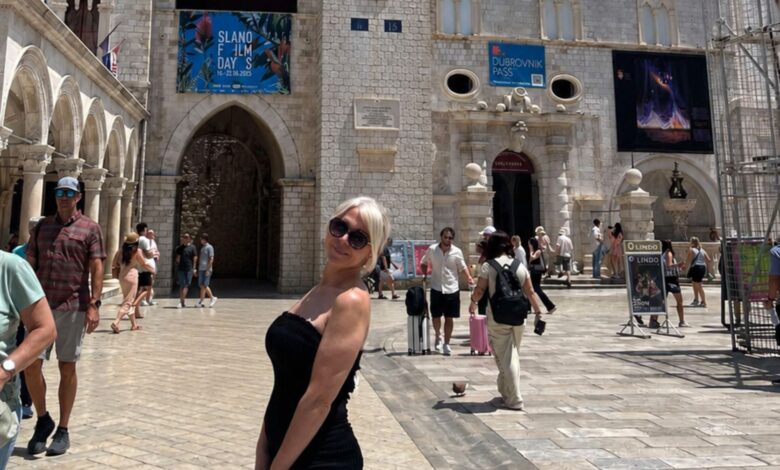
Early June is perhaps the most beautiful time to visit Dubrovnik. My second trip to this stone city, once the capital of the independent Republic of Ragusa (1358–1808), began from Montenegro as a one-day family excursion. Just enough to soak up the Mediterranean atmosphere within the walls of the Old Town, stroll along Stradun, and enjoy some of the local seafood specialties in one of its charming restaurants.
The unusually high temperatures for June made the long wait at the Debeli Brijeg border crossing even more exhausting, with queues already exceeding an hour and a half in the pre-season. The same could be said for climbing Dubrovnik’s city walls, rising up to 25 meters high and stretching for nearly two kilometers. Once built to protect the city from invaders, they now offer breathtaking views of the Adriatic Sea and the city’s iconic terracotta rooftops. The perfect balance for that warm June day was a leisurely walk by the sea, a cappuccino on Stradun, and lunch in one of the traditional taverns within the Old Town.
Fighting Overtourism: Restrictions on Vehicles and Cruise Ships
Dubrovnik is one of the European cities that has gone the furthest in tackling overtourism. In order to protect its UNESCO-listed historic center and improve the quality of life for local residents, the city has introduced a series of measures in recent years under the “Respect the City” initiative.
One of these measures is restricted traffic around the Old Town. At the entrance to the historic center, a sign prohibits vehicles without a special permit. Fines for violating this rule amount to several hundred euros, while those whose work requires daily access to the protected zone must pay several thousand euros annually for a permit. We learned this from a friendly local taxi driver who drove us “down to town” after we left our car in a public garage, where parking costs seven euros per hour. When asked whether Stradun was crowded, he replied that things become particularly difficult whenever two cruise ships carrying around 4,000 passengers each dock in Dubrovnik on the same day, sending thousands of visitors into the Old Town at once.
In recent years, the city administration has limited the number of cruise ships allowed to dock—no more than two large cruise ships per day—and the number of passengers visiting the Old Town at the same time is capped at approximately 4,000–4,500. Cruise ships are also required to remain in port for at least eight hours, helping reduce sudden waves of visitors flooding the historic center.
As part of the “Respect the City” sustainability program, tourist buses must reserve unloading time slots near the Pile Gate in advance, with substantial fines imposed for unauthorized arrivals. Construction cranes have disappeared from the city’s skyline, as new building projects have been halted, and the expansion of tourist apartments within the historic center is tightly controlled to preserve residential life and prevent local depopulation.
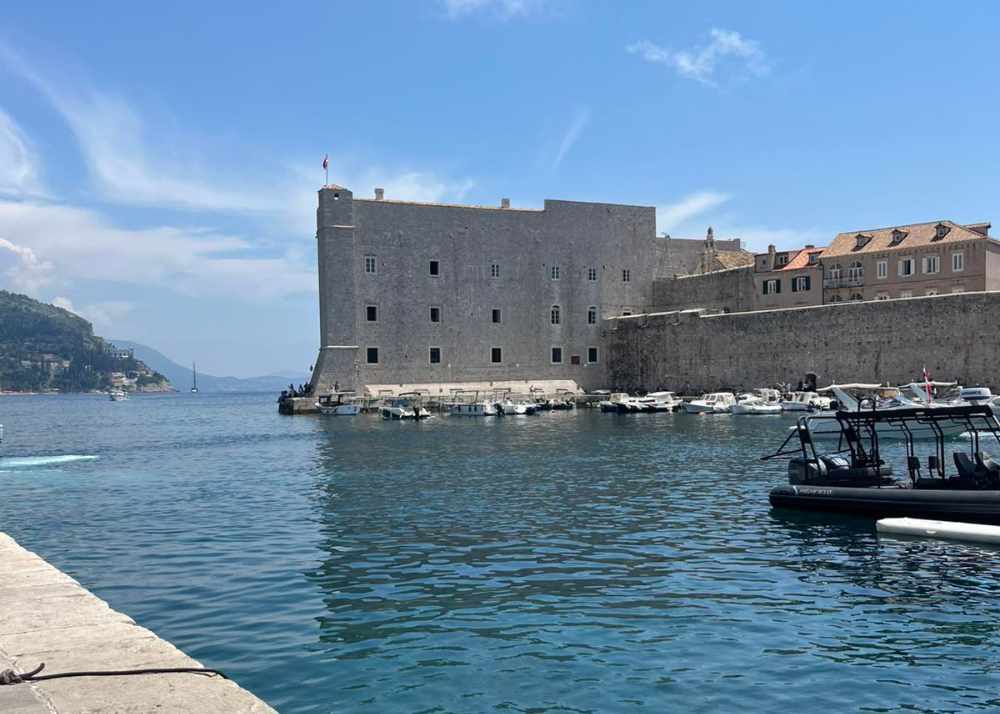
Dubrovnik also relies on video surveillance, digital visitor monitoring, and close coordination with the port authority and travel agencies to prevent overcrowding in the city’s busiest areas.
These measures have earned Dubrovnik international recognition as one of Europe’s leading examples of sustainable tourism management, demonstrating how a historic destination can successfully control mass tourism while maintaining a high number of visitors and preserving the quality of life for its residents.
A “Beehive” of Cruise Passengers and a Cappuccino on Stradun
A city that resisted conquerors for centuries—until Napoleon’s troops entered Dubrovnik in 1806 and abolished the Republic of Ragusa in 1808—reveals a new story around every corner: the Rector’s Palace, Sponza Palace, Onofrio’s Fountain, Baroque mansions, narrow stone streets, and stairways leading to hidden squares filled with flowers and cozy restaurants.
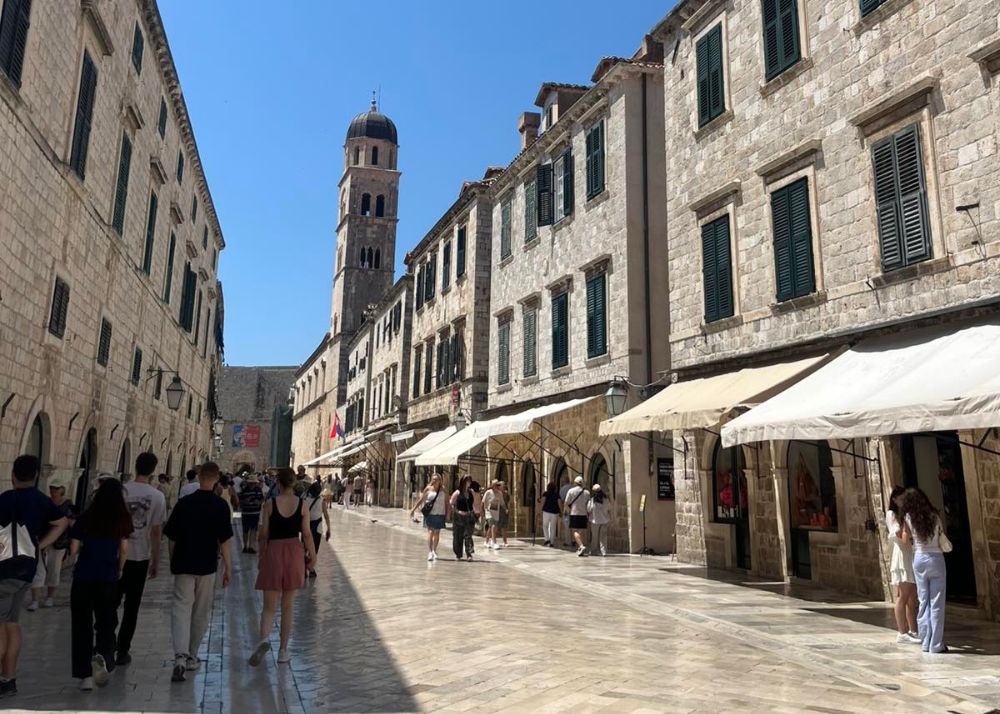
Passing through Pile Gate leads directly onto Stradun, the Old Town’s main street, paved with polished limestone that gleams like marble in the sunlight. People leisurely sip coffee on café terraces, while the sounds of street musicians drift through the city squares. The city seems almost peaceful. We enjoy a cold lemonade and a cappuccino when, within just fifteen minutes, Stradun transforms into a buzzing hive of people speaking countless languages. A cruise ship—perhaps even two—has just arrived, releasing thousands of tourists into the city. Dubrovnik welcomes around 900,000 to one million visitors annually, arriving both by land and by sea.
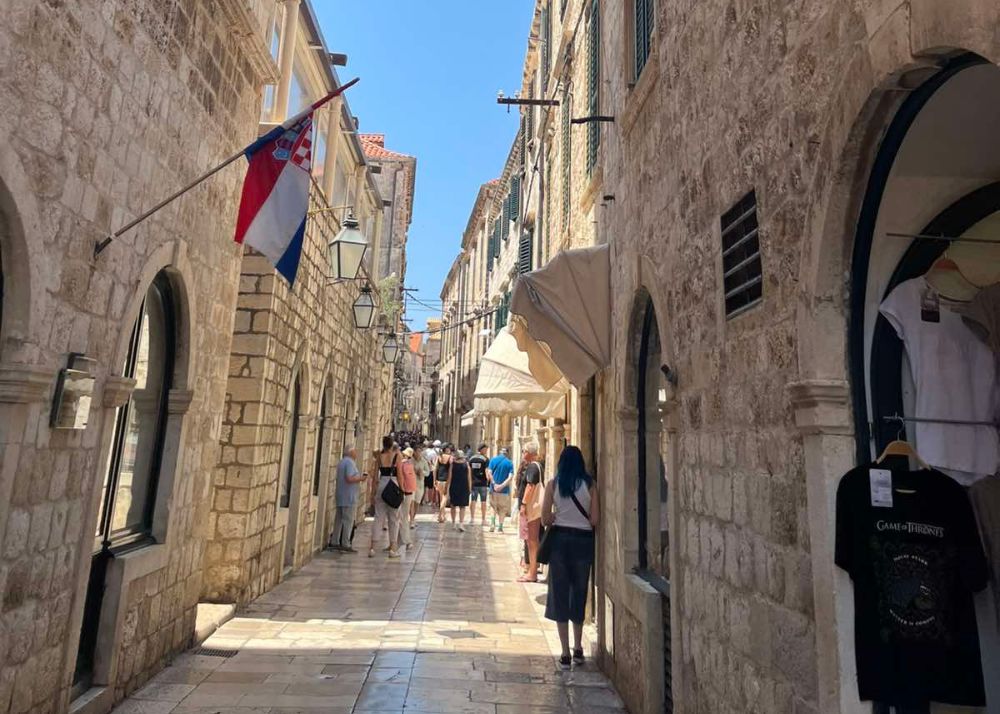
Locals say the best time to experience Dubrovnik is early in the morning, before the cruise ships arrive, or in the evening, after most organized tour groups have left the Old Town. At those times, the stone streets grow quiet, the summer temperatures become ideal for walking, and the atmosphere most closely resembles the Dubrovnik of centuries past.
The Church of the Holy Annunciation in the Heart of the Old Town
While wandering through the maze of narrow streets in the Old Town, along Od Puča Street just a few minutes from Stradun, we arrive at the Serbian Orthodox Parish and the Church of the Holy Annunciation, an important part of Dubrovnik’s cultural and religious heritage. Built in 1877, it is the only Orthodox church within Dubrovnik’s city walls. Its modest exterior conceals a richly decorated iconostasis and a valuable treasury, making it one of the city’s lesser-known yet truly remarkable landmarks.
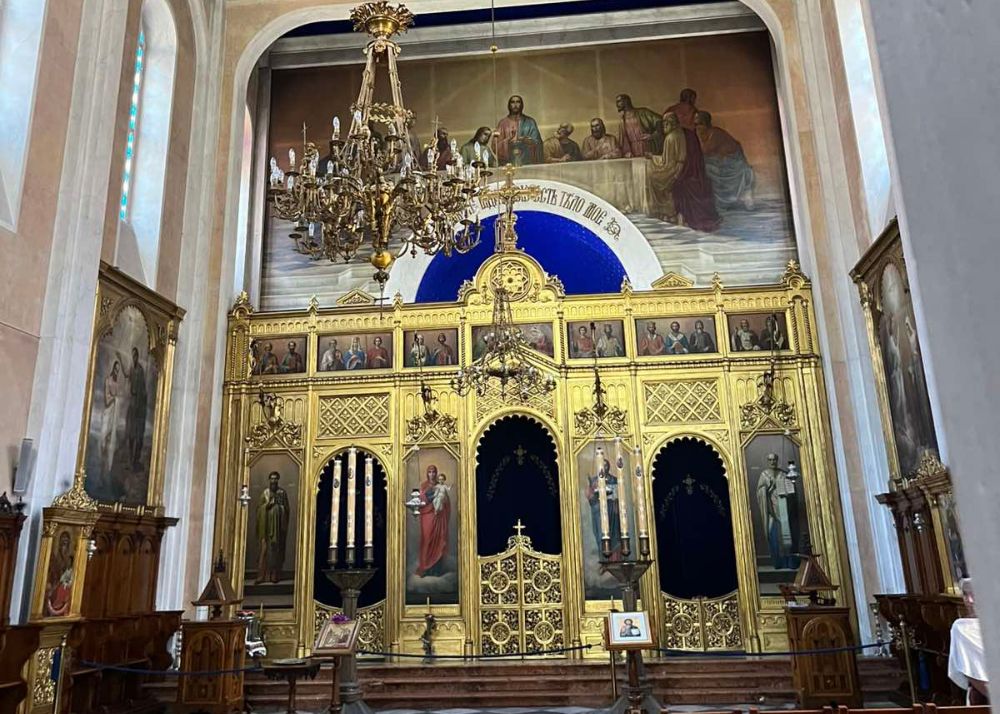
Adjacent to the church is the Museum of the Serbian Orthodox Parish, home to an impressive collection of icons, liturgical objects, manuscripts, and rare books. Among its treasures are icons dating from the 15th to the 19th centuries, elaborately decorated liturgical vestments, early printed books, manuscripts, and a library containing around 12,000 volumes. The collection bears witness to the centuries-long presence of the Orthodox community in Dubrovnik and its contribution to the city’s cultural life.
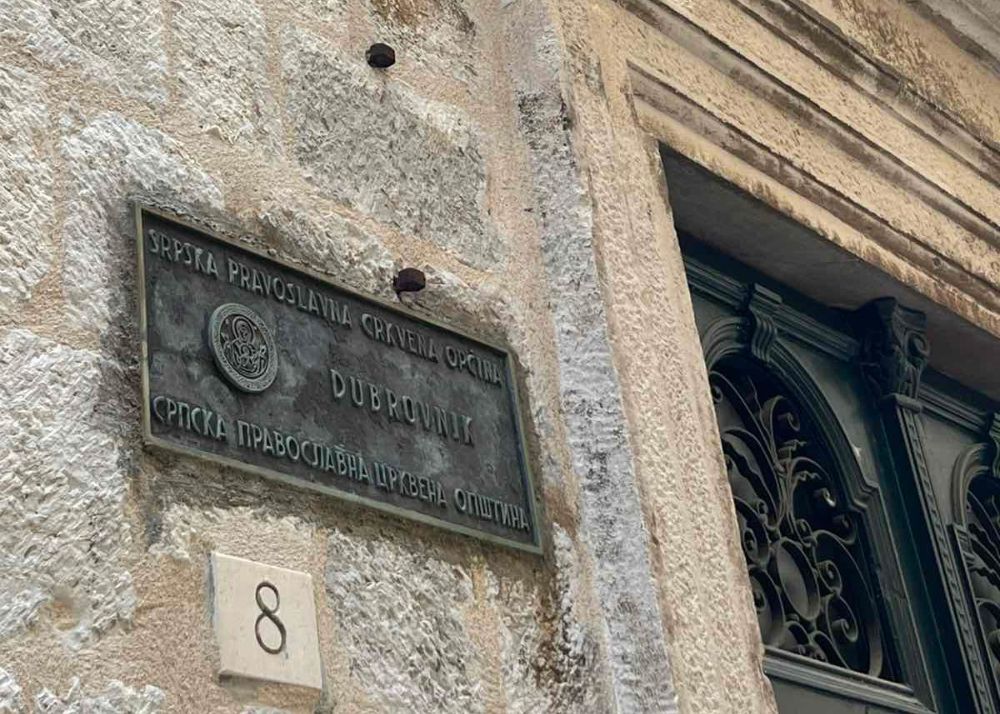
The Orthodox community has been present in Dubrovnik for more than two centuries. Toward the end of the 18th century, the city authorities allowed the establishment of an Orthodox parish, with services initially held in a modest adapted building. It was only in the late 19th century that the community received today’s Church of the Holy Annunciation in the heart of the Old Town, which continues to serve as the spiritual and cultural center of Dubrovnik’s Orthodox faithful—numbering around 800 according to the 2021 census.
The Mediterranean Warmth of Dubrovnik’s People
If you spend at least two days in Dubrovnik, beyond Stradun and the Old Town—with its distinctive architecture, palaces, squares, churches, and centuries-old reminders of the Republic of Ragusa—you should also visit Fort Lovrijenac, perched on a dramatic cliff just outside the city walls, offering one of the most spectacular views of Dubrovnik. Sunset is equally magical from Mount Srđ, reached in just a few minutes by cable car. Another must-see is Lokrum Island, a protected nature reserve with botanical gardens, peacocks, an ancient Benedictine monastery, and numerous secluded coves perfect for swimming, only a ten-minute boat ride from the Old Town.
And of course, what always delights me, wherever I travel, are the people—their character and kindness toward visitors. The people of Dubrovnik welcomed us warmly everywhere we went: on the streets, in restaurants, souvenir shops, taxis—everywhere—with genuine Mediterranean hospitality, always ready to help or share an interesting story.
Because a city’s identity is shaped not only by its walls and monuments, but also by the people who have preserved them for centuries. That is precisely why Dubrovnik’s message, embodied in its UNESCO-backed initiative, is so meaningful:
“Respect the City.”
The author of this article is journalist and Director of the marketing agency First Media Group.